

iOS vs Android App Development: Which Platform Is Right for Your Business? A Business Decision Guide
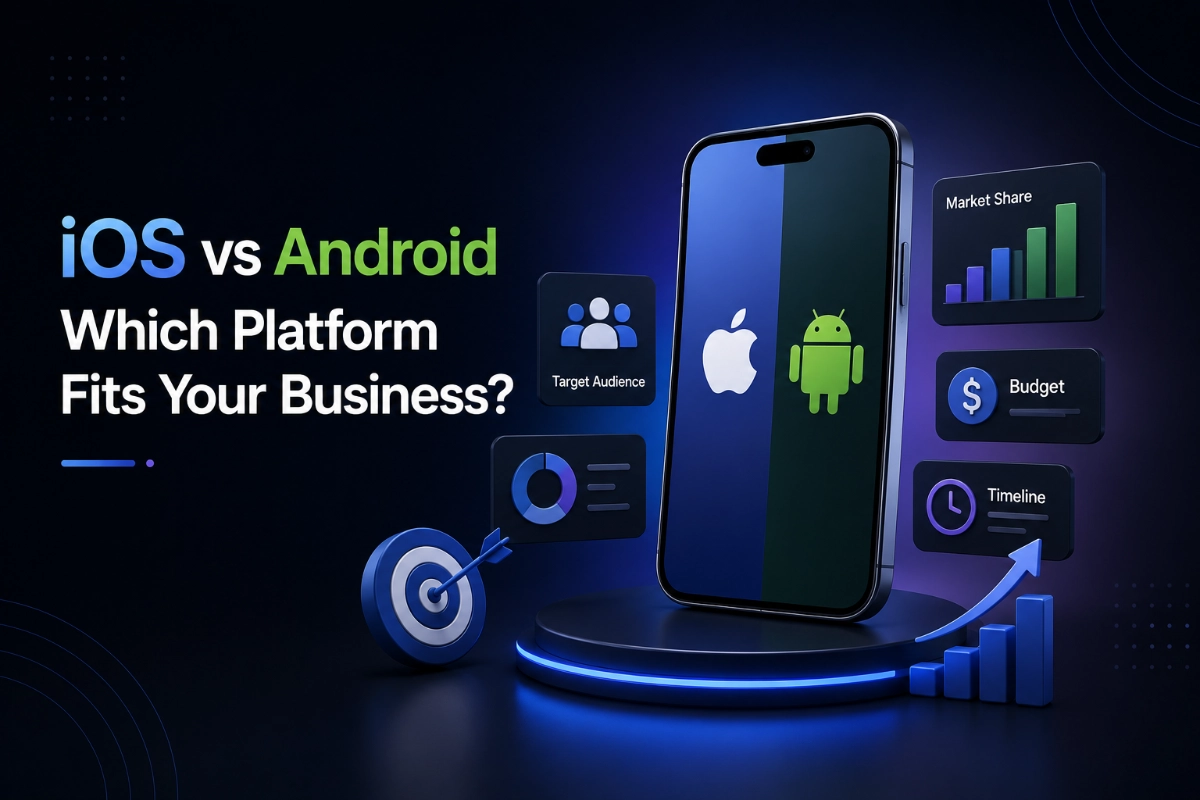
Launching a mobile application is an exciting step for any business, but one of the first questions decision-makers face is whether to build for iOS, Android, or both. While many assume launching on both platforms is always the best approach, the right decision depends on several factors, including your target audience, business objectives, budget, timeline, and long-term growth plans.
Choosing the right platform isn’t just a technical decision—it directly influences development costs, user acquisition, maintenance, and your application’s overall success. Understanding the strengths of each platform helps businesses make informed investments rather than relying on assumptions.
Should You Build an iOS App, Android App, or Both?
There is no universal answer because every business serves a different audience.
If your primary users are professionals, enterprise clients, or customers in markets such as North America, Western Europe, or Australia, launching an iOS application first can often make strategic sense. Apple users generally adopt new technologies quickly, spend more on digital products, and operate within a highly standardized ecosystem, making development and testing more predictable.
Android, on the other hand, dominates the global smartphone market and reaches a much broader audience across Asia, Africa, South America, and many emerging markets. Businesses looking to maximize market reach often prioritize Android because of its larger user base.
For organizations targeting customers across multiple regions or planning rapid business growth, developing for both platforms provides the best user coverage. Modern frameworks such as React Native and Flutter can also help reduce development effort while maintaining consistent functionality across operating systems.
Rather than asking which platform is better, businesses should ask which platform aligns with their customers, market strategy, and long-term objectives.
Factors That Should Influence Your Decision
Several business and technical considerations should guide your platform selection.
Target Audience: Understanding where your customers are located and which devices they use should be the starting point. Market research often provides clear direction before development begins.
Budget: Developing separate native applications for iOS and Android typically requires more time and resources than cross-platform development. Businesses with limited budgets may choose to launch on one platform first before expanding.
Timeline: If speed to market is a priority, cross-platform frameworks can accelerate development while maintaining a consistent user experience.
Application Complexity: Applications that rely heavily on device-specific features, high-performance graphics, augmented reality, or intensive processing often benefit from native development.
Maintenance: Supporting multiple platforms means managing updates, testing, bug fixes, and operating system compatibility over time. Planning for ongoing maintenance is just as important as planning the initial build.
By evaluating these factors early, businesses can avoid unnecessary redevelopment and make technology decisions that support future growth.
When Does Building for Both Platforms Make Sense?
Many successful businesses begin with a Minimum Viable Product (MVP) to validate their idea before investing in full-scale development. Depending on available resources, this MVP may launch on a single platform to gather user feedback and measure demand.
However, if your application supports ecommerce, customer engagement, field services, healthcare, education, logistics, or enterprise operations, launching on both platforms often delivers a more consistent customer experience and broader market reach.
Cross-platform technologies have matured significantly in recent years, making it possible to build high-quality applications that perform well across both operating systems while reducing development costs and simplifying long-term maintenance.
The right development approach depends on balancing performance, scalability, user expectations, and business priorities—not simply choosing the most popular platform.
Key Takeaways
- There is no one-size-fits-all answer when choosing between iOS and Android.
- Your target audience should drive your platform strategy.
- Budget, timeline, scalability, and maintenance all influence the decision.
- Cross-platform development can be an effective solution for many business applications.
- Choosing the right platform early helps reduce costs and supports long-term business growth.
Final Thoughts
Selecting the right mobile platform is one of the most important decisions in any app development project. Rather than focusing solely on market share or development costs, businesses should consider who their customers are, how they will use the application, and how the app will support future business objectives.
A well-planned platform strategy creates a stronger foundation for user adoption, scalability, and long-term return on investment.
Ready to build a mobile application that aligns with your business goals?
Whether you’re planning an iOS app, an Android app, or a cross-platform solution, organix-IT helps businesses design, develop, and launch scalable mobile applications tailored to their audience, industry, and long-term growth strategy. Connect with our team to discuss your project and choose the right development approach with confidence.



Hire Developer